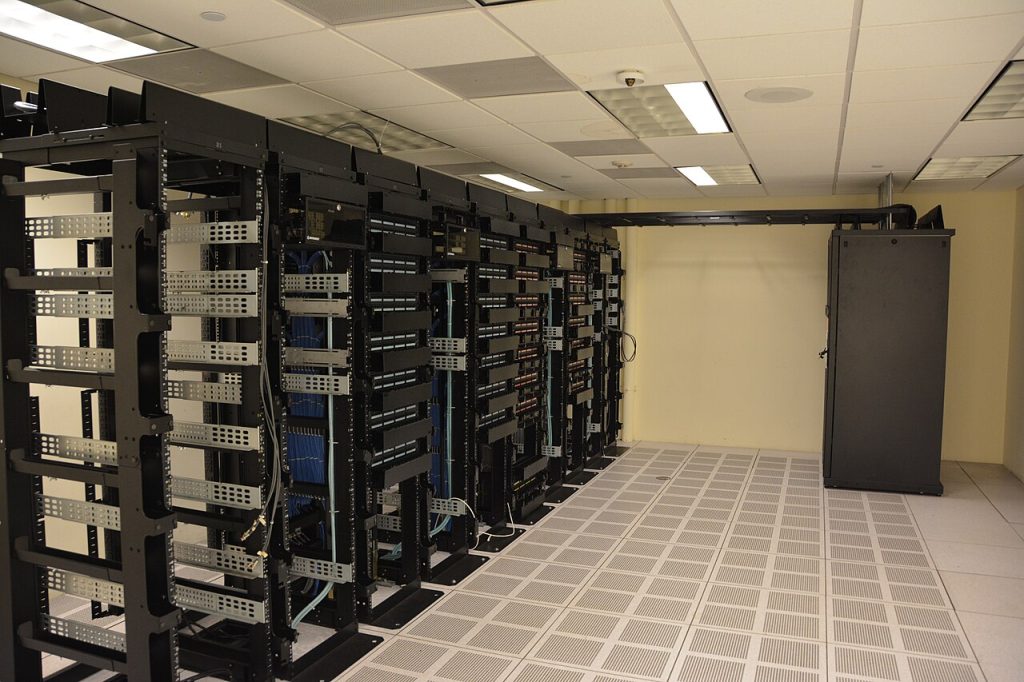
The United States is extending part of its advanced-chip export-control system beyond physical shipments and into remote access to computing power. A new Bureau of Industry and Security interim final rule targets overseas data centers that supply significant advanced computing capacity to customers in China, Macau and other destinations in Country Group D:5.
The remote compute export rule is scheduled to take effect when it is published in the Federal Register on November 19, 2026. BIS will accept public comments for 60 days. Because it is an interim rule, the requirements are real, but the agency can still revise them after reviewing comments.
What the remote compute export rule changes
U.S. controls have traditionally focused on exports, reexports and transfers of physical chips. Renting time on accelerators located abroad can provide similar capability without moving a chip to the customer. The rule addresses that gap by regulating certain services that give covered foreign customers remote access to advanced computing resources.
The measure applies to U.S. persons and certain foreign data-center operators subject to U.S. jurisdiction. It requires providers to examine who owns or controls a customer and whether linked facilities collectively cross the rule’s computing threshold. The text uses an aggregate total-processing-performance threshold of more than 12 million TPP for linked data centers.
That threshold and the rule’s definitions matter more than the broad phrase “cloud controls.” Ordinary web hosting is not the target. The policy is aimed at large pools of advanced accelerators that could support frontier-model training, inference or other strategic workloads.
Who faces the new restrictions
The central restriction concerns significant remote compute supplied to entities headquartered in, or ultimately controlled from, destinations in Country Group D:5, including China and Macau. Providers cannot rely only on a customer’s immediate billing address. They are expected to conduct due diligence on ownership and control.
BIS also created destination controls for certain large data-center deployments in Indonesia, Malaysia, Singapore, Thailand and Brazil. A reporting-based exception is available in specified circumstances for facilities owned by U.S.-parented companies. The details are technical, so providers will need to map corporate ownership, locations and linked capacity rather than treat every facility as an isolated account.
A commercial recommender-system exception narrows the reach for some services. That does not create a blanket exemption for every commercial AI workload; providers must still check the conditions in the rule.
Why BIS says remote access matters
Advanced accelerators are useful because many can operate together. A customer that cannot lawfully acquire a controlled chip may still obtain comparable capability by renting a sufficiently large cluster elsewhere. BIS says the new framework is intended to prevent remote access from becoming a substitute route around chip controls.
The rule arrives as data centers, cloud contracts and electricity supply become inseparable parts of AI policy. Future & Fact’s guide to AI infrastructure explains how accelerators, networking, cooling and power determine the usable capacity of a computing facility.
What the rule does not establish
The policy does not prove that every overseas data center is serving a restricted customer. It also does not ban all remote computing outside the United States. Compliance turns on destination, ownership, capacity, end use and available exceptions.
BIS also rescinded the earlier AI Diffusion Rule. That means companies should not combine the two frameworks as though both remain in force. The November rule is the operative text for this new remote-access approach.
The practical test will be implementation. Cloud and data-center providers must identify customers and linked facilities without blocking lawful research and commercial use. Regulators, meanwhile, will need evidence that the controls are reducing circumvention rather than simply shifting contracts among jurisdictions.
This article explains a public regulatory document and is not legal advice.